January 31, 2009

Land For Sale


The big land sell-off

With vast tracts of land being sold in Madagascar, and Sudan and other African governments actively seeking investors in agricultural land, are we witnessing a neo-colonial land grab or will the investment result in greater food productivity to the long-term benefit of recipient nations? M J Morgan ponders the possibilities.

In November, South Korea’s Daewoo Logistics made the startling announcement that the company had secured a 99-year lease on 1.3m hectares of land, an area roughly half the size of Belgium, from the government of Madagascar. Daewoo’s investment of $6bn is intended to produce 4m tonnes of corn and 500,000 tonnes of palm oil a year, mostly for export. Investments in African land by foreign interests are gathering pace. In August, Al-Qudra Holdings of Abu Dhabi said that it was looking to acquire 400,000 hectares of land in Asia and Africa, with Sudan a likely candidate, for the cultivation of corn, rice and cattle. The company already farms 1,500 hectares in Morocco and Algeria. Saudi Arabia and the United Arab Emirates have already acquired substantial holdings in Sudan. The Abu Dhabi Fund for Development alone is set to cultivate some 30,000 hectares of land in the north of Sudan and Hadco, of Saudi Arabia, is investing more than $96m in the country to lease 10,000 hectares on the banks of the Nile, near Khartoum, to produce wheat, vegetables and fodder. (See box).

There have been similar investments in Mozambique, Uganda and Zimbabwe, as well as globally in the Philippines, Cambodia, Pakistan and Ukraine – amongst other nations.Ethiopia’s Prime Minister, Meles Zenawi, has been actively soliciting Middle East investment countries, describing himself as “very eager” to attract further land deals. Egypt too has been touting for such investment. A UK company recently acquired 3,000 hectares in Ethiopia to grow Jatropha, a plant whose non-edible seeds, if processed, can produce biodiesel. This follows the lease by Flora EcoPower of Germany, through a local subsidiary, of 8,000 hectares in Oromia province for the cultivation of castor seeds. UK biofuel company, D1-BP Fuel Crops is also actively planting Jatropha in Swaziland and Zambia, and also has plantings in Madagascar. The growing of crops for biodiesel is contentious. World Bank economists have pointed to the increase in biodiesel crops as at least partly responsible for the spike in crop prices last year. Others are concerned it may damage the soil or environment. Western Australia has banned Jatropha as “invasive and highly toxic to people and animals”.

The companies involved say that as the hardy Jatropha grows on marginal land unsuitable for crops, it does not compete with other crops. They also argue that it can be intercropped with coffee, sugar, fruits and vegetables. In many African countries it has been planted around the perimeters of farmland. Jatropha, a native of Central America, may also not have been adequately domesticated. However, it yields four times as much fuel as soya bean and 10 times more than maize. Its proponents argue that it can also improve soil quality, as its leaves compost down.

Cutting for Stone by Abraham Verghese

Abraham Verghese is a physician whose nonfiction books The Tennis PartnerMy Own Country received rave reviews. Now appears his much-anticipated first novel, Cutting for Stone. Set primarily in an Ethiopian hospital called Missing (a misprint of “mission”) in the capital of Addis Ababa, it’s a contradiction of sorts — half literary novel, half soap opera, an exhausting and fantastic evocation of the life of a pair of twins whose mother was a nun and father an English surgeon.

The twins both grow up to be doctors and become patients in a ground-breaking live organ transplant, performed by their estranged father, which is both the tragic and triumphant end of the novel. Written with a lyrical flair, told through a compassionate first-person point of view, and rich with medical insight and information, it’s a novel that transcends its weaknesses and makes for a memorable read.

Spanning the half-century between the boys’ birth in 1954 to the discovery of a lost letter that solves a plot mystery in 2004, the story touches the edges of history. Primarily it’s an indictment of the cruelty of Ethiopian Emperor Haile Selassie. As the boys grow up they both come to fall in love with a young African woman named Genet, the love interest of the plot, who is the daughter of a rebel figure, Zemui, and who later becomes an Eritrean rebel herself. Deplorable poverty and vicious dictatorial rule are what these people fight against.

Here’s an example of that viciousness: At one point the twins, Shiva and Marion, see the emperor pass by; he waves to them graciously. “It was 1963, the year Kennedy was assassinated. ... Of the twenty-six cars at His Majesty’s disposal, twenty were Rolls-Royces. One was a Christmas present from the Queen of England. ... An old woman waving her paper must have caught the Emperor’s eye. The Rolls stopped. The old woman, bowing, thrust her paper to the window with both hands. She seemed to be speaking. The Emperor was evidently listening. The old woman became more animated, gesturing with her hands, her body rocking, and now we could hear her clearly. The car moved on, but the old lady wasn’t done. She tried to run with the Rolls, fingers on the window. When she couldn’t keep up, she yelled, ‘Leba, leba’ — ‘Thief, thief.’ She looked around for a stone, finding none, took off her shoe and bounced it off the trunk before anyone could react. I saw only the rise of the policeman’s club and then she was slumped on the ground, like a sack. The palace gates swung shut. The old woman, motionless, nevertheless got a vicious kick to her ribs.”

The mention of Kennedy and the Queen of England underscore the implicit cooperation of Western governments with Selassie’s despotic rule.

Cutting for Stone’s most melodramatic element is its plot, which is supercharged by a series of mysteries that include the dire fate which befell their mother, Sister Mary Joseph Praise, the less-than-immaculate conception of the twins, the unknown existence of a letter that explains all, and how and when the beautiful Genet will tear apart the bond between the brothers. The novel is a bit of a potboiler, full of minor characters who have significant roles in plot twists, and that fuels in part its excessive length and numerous digressions.

Verghese’s first book described working at an AIDS clinic in Tennessee, and his medical expertise informs and enlivens much of this story. He describes the death of Sister Mary Joseph Praise while giving birth to the twins in lavish and queasy detail — the introductory section of the novel spans 166 pages. After their mother dies, the twins are adopted by two other doctors, Hema and Ghosh. These two doctors become the pillars of their world, guiding them through entanglements with Ethiopian resistance to Selassie and toward a life as surgeons.

All through the novel Shiva and Marion struggle with their cursed history, trying to unravel the mystery of their conception and their abandonment by their father, Thomas Stone. He’s a good man with a troubled past: a dominant father and a mother who died of syphilis complications, contracted from her husband.

Why did Thomas Stone abandon his sons? How did he and Sister Mary Joseph conceive them? (The old-fashioned way, an easy guess.) Which of the sons will live and which will die? All of these central mysteries are presented early in the novel. Ultimately all are answered.

Contemporary literary comparisons are not easy with Verghese. At times he seems to be reaching for the magical realism of Gabriel Garcí a Márquez, but with a more pragmatic bent. He is of Indian heritage but does not have Salman Rushdie’s satiric tendencies. He glorifies doctors but does not possess the irony or levity of John Irving’s sick physician in The Cider House Rules.

Ultimately, he is a particular hybrid creature, both novelist and physician, and like a mythical beast, has a style and magic all his own.

William J. Cobb’s most recent novel is Goodnight, Texas.

Source

January 28, 2009

Over 5,000 persons languishing in TPLF regime’s secret prisons, defecting soldiers say

Over 5,000 persons languishing in TPLF regime’s secret prisons, defecting soldiers say

By Staff (Shabait.com)
Jan 26, 2009
Asmara, 26 January 2009 – Defecting Ethiopian soldiers who arrived in Eritrea recently said that more than 5,000 innocent persons are languishing in secret prisons of the TPLF regime.

Deputy inspector Yehaulashet Alebachew Delele, who is himself a victim of the atrocities and arrived here along with three other soldier, stated that many of the detention inmates have been exposed to death in the prisons described as ‘Guantanamo Ethiopia.’

Indicating that the regime’s cadres resort to acts of abduction against any individual they ‘suspect,’ Yehaulashet Alebachew from the Amhara ethnic group disclosed that security agents of the regime liquidate victims at Tolai detention center in the wilderness of the Oromiya Zone.

He further pointed out that similar horrible detention centers exist in various parts of the county, among which is the Dedesa prison where bodies of those who lost their lives through inhumane acts of brutality are thrown into the nearby river.

The other soldiers who arrived here abandoning the racist policy of the TPLF regime are: Desalegn Awanew Feisa from the Kambata ethnic group, Alemayehu Marig Kassa from the Amhara ethnic group, and Getachew Kayamo Debiso from the Sidama ethnic group.

January 27, 2009

Waamicha Walgahii (Frankfurt, Germany)


Waamicha walgayii

Seminaara ummataa fi do`annoo sirba
aadaa saba Oromo biyya Jarmanii kessa
itti geggefamuf qindaawe irraa akka qooda fudhattaniif (hirmaattaniif) kabajaa Oromummaa hundeefateen isin aferra.


Guyyaa seminaarri geggefamu: Guraandhala (Feburary)14 bara 2009

Yeroo sagantaa seeminaraa: 10:00 AM - 18:00 (6:00) PM

Yeroo sagantaa sirba aadaa: 20:00 (8:00) PM -
6:00 AM

Iddoo walgayii: magalaa Frankfurt; Johann Wolfgang Universität; Mertonstr 26 -28.

Akkataa gara galma walgayii deemamu: Train lakkofsa U4 Hauptbanhof (main station) irraa qabachuun station lama (2) booda bakka Bockenheimwarte jedhamu itti butanii lafa-jalaa oli ba`un gara galma walgayii adeemtu.

Mata-duree seminaaraa

  • Gabaasa dhittaa mirga-dhala namaa motummaa TPLFn ummata Oromoo irra itti raawatame;
  • Garaagarummaa fi walittidhufeenya qabsoo bilisummaa karaa nagaa fi hidhannoo geggefamu (Mirga-namummaa ummata Oromoo kabachiisuuf barbaachiasummaa qabsoo nagaa fi hidhannoon geggefamu). Akkasumas xinxala gababaa siyasa qabsoo bilisummaa Oromoo kan gartuulee qaama ce`umsaa ABO, qaama jijjiramaa ABO, fi ABO dhaan geggefamaa jiru;
  • Ibsa haala qabsoo bilisummaa Oromoo yeroo ammaa ABOn geggefamaa jiruu;
  • Xinxala haala ijaarsa hawaasoota Oromoo biyya ambaa fi Jarmanii (jabinaa fi laafina) fi tarsimoo ijaarsa hawaasoota Oromoo biyya ambaa jabessuu malu akekuu;
  • Xinxala sochii qabsoo bilisummaa barattoota Oromoo sadarkaalee mana barnootaa gulantaalee 1ffaa fi 2ffaa, kollejjii, fi Yunversitii kessa itti geggefamaa jiru bara 1992 irraa egalee (Analysis of Oromo student liberation struggle in Oromia since 1992 ).
Sirba aadaa saba Oromoo

Wallistooti sirba aadaa Oromoo agarsisuun dibamanii fi kennaa gutuu qaban kan akka wallisaa Mahadii, wallisaa Lencoo, fi wallisaa Wandimuun hirmaattota walgayii gammachisuuf qophaawaniru.

Injifatnnoon ummata Oromoof!

Koree qindeesituu

Jarmanii, Frankfurt

Amajjii 25 bara 2009

Photo (logo): OromiaTimes Web

President Obama's Strong Message to Dictators Everywhere (Quote)

“To those who cling to power through corruption and deceit and the silencing of dissent, know that you are on the wrong side of history, but that we will extend a hand if you are willing to unclench your fist.”

President Barack H. Obama


God knows what Ex-President Bush told Meles those old days ago.


But today, one thing is clear: President Obama's message to dictators everywhere is a headache for Ethiopia's brutal ruler Meles Zenawi.


January 26, 2009

Waaqeffannaan Beekumsaafi Hayyama Seeraa Mootummaa Norwey Argate!


Waaqeffannaan Beekumsaafi Hayyama
Seeraa Mootummaa Norwey Argate!


(Madda Oduu ABO/MOA/Bargan/ Amajjii 25, 2009)

Amantiin Waaqeffannaa biyya Noorwey keessatti beekumsaa fi hayyama qaama seerummaa argatee galmaa’uun tarree amantiilee addunyaa kanaa ta’uun galmeeffamuun isaa beekame.


Maddi Oduu ABO / MOAn/ Noorwey, Bargan irraa akka gabaasetti, amantiin Waaqeffannaa seeraafi mootummaa Noorwey biratti beekumsaafi hayyama seeraa kan argate, Oromoonni Waaqeffattoota ta’an maqaa Gumii Waaqeffattoota Addunyaa-GWA jedhamu jalatti gurmaa’anii tattaaffii yeroo dheeraaf godhaniin ture.

Waaqeffattoti biyya Norway fi biyyoota adda addaa jiraatan amantii Waaqeffannaa deebisanii dagaagsuuf gurmaa’anii hojii jajjabduu karaa sarara paltalk fi quunnamtii garagaraa walitti dhufanii hojjachaa turaniin, Waajjirri dhimma kana hordofuu fi hayyama kennu Muddee 2, bara 2008 Waaqeffannaan amantii Oromoo jedhee galmeessuu isaa waraqaa ragaa 20 koree GWA biyya Noorweyiif kennee jira.

Akka kanaan Waajjirri kun Amantiin Waaqeffannaa Amajjii 17, 2009 irraa kaasee tarree amantiilee biyya Norway keessatti beekamanii fi seeraan galmaa’an waliin qixxeetti galmeeffamuu fi waajjira Mooticha biyyattii biratti beekamuu isaa xalayaa mirkaneessu ibsa gammachiisaa waliin koree Gumii Waaqeffannaa Addunyaa kan biyya Noorweyiif kennee jira.

Akka xalayaan hayyamaa kun mirkaneessitutti, Amajjii 17, 2009 irraa eegalee, koreen Gumii Waaqeffannaa Addunyaa damee Norway miseensota isaa galmeessisuun hojii amanticha barsiisuufi guddisuu raawwachuu danda’a.

Kanuma walii nis, kanneen akka Waaqeffannaatti walfuudhuu barbaadaniif sirna cidha gaa’elaa raawwachiisuu fi ragaa kennuu akka danda’u, akka aadaa amantichaatti sirna awwaalchaa fi bakka awwaalchaa argachuu akka danda’u, Galma Waaqeffannaa kireeffachuu ykn ijaarrachuu akka danda’uuf mirga amantiin tokko qabu mara akka qabaatu Xalayaan Hayyama mirkaneessitu kana irraa hubachuun danda’ameera.

Guleen Adulaa Duraa Gumii Waaqeffattoota Addnyaa dhimma kanarratti dhaamsi darbe akka hubachiisutti, ”warri Waaqeffannaa hordofnu, amantiin Waaqeffannaa saba keenya ummata Oromoo fi Saba Kuush hunda biratti maqaa qofaan osoo hin taane, dalagaan ykn mul’inaan akka jiraatuuf irratti hojjechuuf maqaa GWA jedhuun gurmoofne. Gurmuu kanaan Waaqeffannaa sirnaan barachuu, barsiisuu fi hawaasa addunyaa beeksisuu qofa osoo hin taane, aadaa, afaanii fi seenaa saba keenyaa ittiin guddisuuf nu gargaara jennee amanna. Akka amantiitti ammoo Waaqa tokkicha, kan morkaa fi hiriyaa hin qabnetti amanuu fi isaan buluudha,” jedhanii jiru.

Amantiin Waaqeffannaa kun akka daran guddatuufis Waaqeffattooti fi ummanni Oromoo akeeka eebbafamaa kana hubatanii akka GWA cina dhaabbatan ykn itti makaman dhaamsi Gulee Adulaa Duraa Gumii Waaqeffannaa Addunyaa kun waamicha godhee jira.

Waaqeffannaan sadarkaa addunyaatti seeraan galmaa’ee hayyama seeraa argachuun isaa hedduu kan isaan gammachiise ta’uu kan ibsan miseensi GWA tokko immoo, ’’Waaqeffannaan amantiilee addunyaa kanaaf bu’uura ta’e, garuu, gaadi’amee ture yeroo ammaatti sadarkaa kanarra dhaqqabuun isaa qabsoon sabboontota Oromoo hagam sanyii godhataa akka jiru hubachiisa,” jedhaniiru.

Waaqeffannaan biyya keessatti uumame, Oromiyaa, keessatti seeraan beekamuu fi fudhatmuu dhabuurrayyuu hordoftoonni isaas bifa garagaraan dhiibamanii amanticha akka gadhiisan ykn akka dhabaman godhamaa akka jiru illee beekamaadha. Waldaan Waaqeffannaa kan amanticha iddoo itti awwaalamee baasuuf biyya keessatti hundeeffamee ulaagaa seeraa guutee hayyama fudhate guyyaa 52 keessatti deebi’ee akka cufamu mootummaa wayyaaneen taasisamuunis kan yaadatamuudha.

MOA

Graphics: MOA / OromiaTimes

January 25, 2009

TPLF's Official Leaked Document Exposes Meles Zenawi's Plan to Destabilize Somalia

Written on Friday, January 23rd, 2009 at 5:51 am by ethioforum

Meles Zenawi's distabilization strategy in SomaliaEMF (23 January 2009) This leaked document reveals Meles Zenawi’s military and logistic support to the newly formed Islamist Ahlu Suna Wal Jamea group, aiming at destabilizing Somalia and to getting President Obama’s attention to the region.

According to report by AFP, following withdrawal of Zenawi’s forces from Somalia, people had enjoyed a brief period of peace and families, displaced by fighting in Mogadishu, have started returning.

Fresh fighting erupted soon between the Islamist forces of Ahlu Suna Wal Jamea and Al Shabab, through Zenawi’s destabilization strategy, a religious civil strife.

The Letter sent from Dissasa Diribssa, TPLF Ambassador in Kenya to vice-foreign minister Tekeda Alemu, confirms Zenawi’s military and logistic support to the new Islamist Ahlu Suna Wal Jamea against Al Shabab.

The TPLF thugs, who were telling their supporter to vote for the republican, John McCain opposed to Obama, during the US election campaign, seem very uncomfortable now with Obama’s inaugural speech regarding corrupt and criminal leaders; To those who cling to power through corruption and deceit and the silencing of dissent, know that you are on the wrong side of history; but that we will extend a hand if you are willing to unclench your fist.”

Moreover, Obama’s radical actions to change U.S. foreign policy has threatened Ethiopia’s brutal dictator, Meles Zenawi, who exploited the “War on Terror” (which comes to a sudden end) to win support from the Bush administration, despite regime’s crimes against humanity, war crimes and gross human rights abuses documented by International Human Rights Groups.


January 24, 2009

Can foreign-owned farms solve food crisis (in Ethiopia)?

by Michael Chebsi

Tola Melka was planning to throw a traditional party at his shanty home in rural central Ethiopia, anticipating a bumper harvest. He was grief-stricken in late October when unexpected rains totally destroyed his almost ripened teff, a native staple crop used to make spongy bread.

"I expected the harvest this year would be different," said the Melka, frustration evident on his face. "I wonder what I'll be feeding my children in the months to come."

Last year, Melka and his wife, Shashe Dima -- then pregnant with their sixth child -- endured overwhelming hunger due to lack of rain. This year too much rain -- three consecutive weeks fell at precisely the wrong time -- could make it even worse.

"Nature seems to be at odds with us," says Dima, seated on a hide, breast-feeding her last-born. Melka is just one of the many farmers whose tiny plots of will fail to sustain them through the year.

Some farmers will move to other parts of the country to hire themselves out as workers until the next planting season. But most stay home, hoping for assistance from the government and donors.

Melka and his family will join the 6.4 million people officially identified as food insecure in the country. This has become a major headache for authorities in Ethiopia, where self-sufficiency in food is a distant prospect despite government prioritising agriculture an engine of growth.

The long term Agricultural Development Led Industrialization (ADLI) strategy adopted in 1992 largely aims at transforming the economy by investing in strengthening nine million small-scale farmers.

But the government's ambitious target of harvesting 28 million tonnes of cereals in the first three quarters of the 2007/2008 budget year has failed. The nation produced only 16.4 million metric tones, according to a performance report presented to the Ethiopian Parliament on Jun. 3 by the agriculture ministry.

Authorities seem determined to change this situation by leasing huge chunks of land to other countries for mechanised farming.

The Ethiopian Prime Minister Meles Zenawi has promised Saudi Arabia that his country will provide hundreds of thousands of hectares of unutilised agricultural land for growing cereals in the east African country. This is a follow up to an earlier pledge by Ethiopia to grant 5,000 hectares of land to the Djibouti government for large-scale commercial farming.

The Ethiopian agriculture ministry is identifying available land for such foreign investors; so far close to two million hectares of land have been identified in the regions of Oromia and Amhara, where almost all cereals in the country are produced.

Pundits however are wary of the risk; not just the food but the profits from this farming would be siphoned off to consumers and investors in other countries.

While the government argues that the food produced would be available to domestic markets as well as for export, analysts fear that almost all of it would leave the country because Ethiopians cannot possibly compete with the prices foreign consumers would pay for it.

Saudi Arabia is already one of the top three trading partners of Ethiopia; speaking to the Arab News newspaper in August, Prime Minister Meles Zenawi, said trade volume between the two countries stood at one billion dollars. Ethiopia imports half a billion dollars more in the form of Saudi oil and petroleum than its exports of coffee, meat and other agricultural products. Zenawi said about 240 Saudi companies have been given investment licenses, and they are expected to invest $2.5 billion.

"When local prices go up, these investors sell their outputs locally at the price that customers would pay if they were to import the same agricultural outputs from another country, said Hashim A. Ahmed, macro-economic policy advisor to the government. "They don't necessarily sell their outputs overseas."

There are reports that Saudi Arabia and China are out buying farmland all over the world, from Somalia to Kazakhstan. But other countries short of fertile agricultural land to feed hungry populations are also involved. A closer look reveals an impressive list of countries seeking fertile land: Egypt, Djibouti and Libya in Africa; China, India, Japan, Malaysia and South Korea in Asia; and Bahrain, Jordan, Kuwait, Qatar, Saudi Arabia and the United Arab Emirates in the Middle East.

Ethiopia is just one of over a hundred countries targeted. "This is not something that is happening only in Ethiopia. It's everywhere," says Dr. Wolday Amaha, head of the Ethiopian Economic Association, an independent think tank. "But the net welfare gain for the Ethiopian society has to exceed the loss, if there is any."

Government officials argue that these investors would bring technology. Local farmers, it is said, would copy scientific farming techniques from these investors and be encouraged to produce cash crops.

"The spread of technology in Ethiopian agriculture has been slow thus far," says Ken Ohashi, World Bank's Country Director for Ethiopia. Almost all the ploughing is done with oxen, and tilling, planting and harvesting are done by hand in the horn of Africa country.

But what has grabbed the immediate attention of farmers like Melka is the potential employment opportunity that these investments would bring. "From my experience, depending only on one's own farm for a living is risky," he said. "There has to be an additional source of income. I would have at least depended on my employment income at this grim period."

Agriculture, which still generates close to 45 per cent of GDP is undergoing some changes, and there now seems to be the basis to bring significant increases in productivity. The investments by foreign states are expected to help meet the five years strategic plan of the Ethiopian government where it plans to increase cultivated land by close to five million hectares by 2010.

IPS
Source

The light shines in north Africa

A PC (USA) missionary letter from Ethiopia

by Bruce and Lora Whearty
PC(USA) mission workers

ADDIS ABABA ― As one of our final activities in language school, we attended Nationalities Day, a celebration of the different ethnic groups of Ethiopia.

We crowded together with our teachers into the little blue and white mini-buses that serve most of the people of Addis Ababa as vehicles. They are called 'blue donkeys,' and cluster together in herds at particular points around the city. They follow specific routes back and forth between the gathering points, but have no schedule. They wait until they are full before they go.

Each little bus has two workers. The driver's sole job is to keep the passengers alive in the stampede through the city, while the second man serves as a conductor. He collects money from the passengers, tells the driver when a
passenger wants to get off before the end of the run, and hangs out the open door yelling the destination of the bus to attract more passengers. "Piazza, Piazza, Piazza!" or "Mexico, Mexico, Mexico!" (Yes, there is a major square
called 'Mexico,' but no one has yet been able to tell us why.)

The blue donkeys form an amazing network, an above-ground subway system with each 'car' separately vying for passengers so that it can leave first. They move millions of people per day, careening through the city, for prices
between seven and 21 cents, depending on the length of the route.

We got off our blue donkey at Mexico and walked along with the crowd to the center of Addis Ababa, Meskel Square. We passed some groups of dancers from the south, all dressed up in traditional costumes and eagerly warming up, so we got to watch their dances close up.

Then we were swept into the growing crowd and pushed into the main square. We have no idea how many people were gathered. Half a million? A million? Perhaps the entire population of our native Montana, crammed into one sunny,
windy square lined with flapping flags from the different regions of Ethiopia.

There were families with little kids riding piggyback above the crowd, students in their school uniforms, trying to stick together in the press of people, businessmen and women dressed in stylish western clothes, dozens of
different traditional costumes, and pickpockets galore. Stealing is so common in this culture that the index finger is called the "thief finger" ― the one used to hook something out of a pocket.

Abuba, our young, muscular, six-foot-four teacher, watched protectively from behind us. He called out, "Right, right, go right!" when he saw a fight breaking out on our left, and at one point grabbed a man reaching for Lora's purse.

Abuba calmly stood on one of the thief's feet, looked sternly down into his face, and twisted his arm while the thief cried out, "I didn't know they were with you!" That evidently is a reasonable excuse here. It's sort of wrong to steal, like a misdemeanor, but it's a real offense to hospitality to steal from a countryman's guest.

The Prime Minister gave an unintelligible speech, garbled by the loudspeaker system and the breeze, and then the different groups of 'nationalities' paraded in. From our vantage point, we could generally only see tiny, brightly-colored specks across the milling crowd. "That group in red are all holding long spears!" or "Those guys in leopard skins have antelope horns on their heads!" we pointed and exclaimed to each other, and gasped with the whole crowd when two hundred Oromo horsemen, carrying lances and shields and wearing baboon manes in their hair, suddenly galloped the length of the square.

It was an amazing display of diversity, a celebration of tolerance. Bare-breasted young dancers from the south, naked above the waist except for beads and initiation scars, stood alongside completely draped Muslims from the north, their plain robes fluttering gracefully. On this particular day, the southern lances and the northern scimitars were only for show and went unused.

Later in December, a group of missionaries gathered one evening to sing selections from Handel's Messiah, accompanied by a tape recorder. It's a tradition here, a way for the expatriate community to celebrate Western-style
Christmas.

No rehearsal. Only a couple of men. A variety of voices, some creaky with age. And the right to get up between movements to help ourselves to more cookies! The whole idea seemed ridiculous to me.

Then the power failed, and we had to find batteries for the tape player and candles for us to see the music. Hunched over our music in the dark, straining thinly at the high notes, and trying to follow the little tape recorder, we
were touched by the experience. Somehow, crowded close together in the candles' glow, 21 expatriates from eight different nations claimed this great message as our own, and we moved beyond our ridiculous inadequacy to a deeper sense of community and joy.

Lora and I celebrated our Christmas with laughter. We had bought each other gifts at an NGO bazaar, splitting up, carefully avoiding each other, and then glancing both ways like thieves before quickly paying and stashing our
purchases in shopping bags. When we unwrapped our presents Christmas morning, we discovered that we were exchanging beeswax candles from the same booth!

We wish for all of you this Christmas season a celebration as profound as ours. Look out for your more vulnerable neighbors in the crowd and come to their protection. Stand next to someone who offends you, without judgment, and
dance. Claim the right to sing in your own voice, especially in times of darkness. And light your evening prayers with sweetness, given and received. Remember to carry the light forward, week by week, day by day.

Information about and letters from PC(USA) mission workers throughout the world is available on the Mission Connections Web site

www.pcusa.org/missionconnections

January 20, 2009

HRLHA Press Release No. 15: Harrassments and Intimidations Against Oromos Continued!

HRLHA Press Release No 15, January 2009
Harassments and Intimidations against Oromos Continued
EPRDF Introduces New Form of Torture

Finfine/ Addis Ababa;-In a continued campaign of harassments and intimidations in various parts of the state of Oromia in Ethiopia, 22 other Oromo civilians have arbitrarily been arrested and taken into custody in the past fifteen days. Among the 22 most recent arrests were Mr. Dachasa Marga, a lecturer with Rift Valley University College, and Mr. Sileshi Dagafa, whose detailed identity was not know at the moment.

According to information gathered by HRLHA agents in the Capital Addis Ababa, the Oromo detainees have been subjected to the newly introduced form of torture described as “Silent Torture”. Upon their first appearance in court on January 9, 2009, Mr. Dachasa Marga and Mr. Sileshi Dagafa complained before the judges that they themselves and other Oromos detained with them have, at different times, been forced to spend about fifteen hours in standing position. The two have been scheduled to reappear in court on the 22nd of January, 2009.

Western Oromia;- HRLHA agents have also obtained the names of six Oromo farmers who have been being held in solitary confinement for the last three and a half months.

Gurricho Fida,

Gaddafa Mosisa,

Dame Qanno,

Gammachu Birrasa,

Tariku Raaga, and

Naga Berhanu were picked up from different parts of Wollega Province, Western Oromia on and around October 7, 2008 and taken to Finfine/ Addis Ababa, where they have been detained since then, and which is about 600 kilometers away from their home villages. None of the families and friends of those six detainees has heard from them ever since they were arbitrarily arrested on alleged political grounds.

Eastern Oromia;-In a separate arbitrary action taken by members of the Federal Army and regional police on January 04, 2009 in Hararge Province of Eastern Oromia/ Ethiopia, a businessman has been shot dead and two others wounded, according to information obtained by HRLHA local correspondents.

Mr. Abadir Jamal (age 26), an Oromo national originally from Masal District in Hararge, died instantly from two gun shots by the army members, while Mr. Dasi Mohammed (another Oromo national) and Mr. Abdi Maddi (a Somali national from Wachalet Town) were severely wounded and taken to Imach Hospital. The residents of Harar and Awaday towns took to the streets protesting against the extrajudicial killing of Mr. Abadir Jamal. The local administration responded to the demonstration by arresting and detaining dozens of local residents.

Brief update

The 16 detained (under the file that includes Bekele Jiraataa)

Mr Bekele Jirata and his (fifteen) codefendants complained in court about the newly introduced “Silent Torture” (to be placed in standing position for about fifteen hours), which is said to have been adopted by the EPRDF for it does not leave behind any physically noticeable symptoms. Mr Bekele Jirata and his (fifteen) codefendants were among the most recent batches of Oromo detainees arbitrarily arrested mainly from the Capital and nearby areas for allegedly supporting the Oromo Liberation Front (OLF) (HRLHA Press Release No 14). The HRLHA has learnt that Mr Bekele Jirata and his codefendants have now been transferred to Aqaqi Prison, located on the southern periphery of the Capital. Their next court appearance is on the 20th of January, 2009.

HRLHA calls upon governments of the West, all local, regional and international human rights agencies to join hands and demand the immediate release of the detainees and halt of this killing innocent citizens, mass arrest and imprisonment of innocent Oromo civilians by the Ethiopian government.

The HRLHA is a non-political and non-profit organization that attempts to challenge abuses of human rights of the people of various nations and nationalities in the Horn of Africa. It works on defending fundamental human rights including freedoms of thought, expression, movement and association. It also works on raising the awareness of individuals about their own fundamental human rights and that of others. It encourages the observances as well as due processes of law. It promotes the growth and development of free and vigorous civil societies.

Obama Sworn in as 44th President of U.S.

'The Challenges We Face Are Real'

By William Branigin
Washington Post Staff Writer
Tuesday, January 20, 2009; 12:15 PM
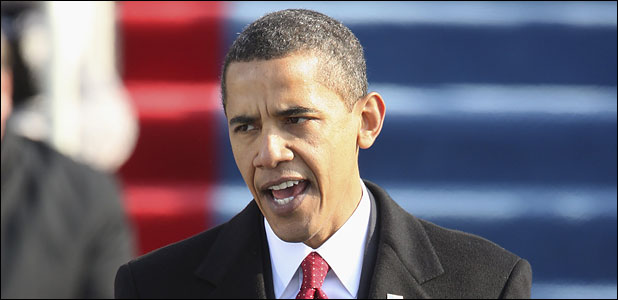
Barack Obama took the oath of office today as the 44th president of the United States and pledged to "begin again the work of remaking America."

Addressing a huge throng estimated at more than 2 million people on the capital's Mall and millions of others watching on television, Obama recognized the multiple crises now afflicting the nation at a time of war abroad and economic turmoil at home. But he sought to rally Americans to a "new era of responsibility" and the promise of a brighter future.

He cited a profound "sapping of confidence across our land -- a nagging fear that America's decline is inevitable, and that the next generation must lower its sights." The challenges are real, serious and many, and "they will not be met easily or in a short span of time," he said.

"But know this, America -- they will be met. On this day, we gather because we have chosen hope over fear, unity of purpose over conflict and discord. On this day, we come to proclaim an end to the petty grievances and false promises, the recriminations and worn out dogmas, that for far too long have strangled our politics."
ad_icon

Obama continued: "Starting today, we must pick ourselves up, dust ourselves off, and begin again the work of remaking America."

Earlier, Obama began the final steps on his improbable journey to the presidency by attending a church service and paying a visit to White House for coffee.

The countdown to Obama's oath-taking shortly before noon came as Americans gathered in Washington in record numbers for the inauguration, braving midwinter cold and heavy security to witness an event -- the swearing-in of the nation's first African American president -- that for many marked a dramatic break with the past and the dawn of a new sense of possibility.

In his much-anticipated inaugural address, Obama sketched out a broad vision for the coming years in domestic policy, while urging rejection of the "false choice" between security and American ideals when it comes to foreign policy.

After an invocation by Pastor Rick Warren, a conservative who was included as a way to reach out to a segment of the population that did not support Obama, Joseph R. Biden Jr. took the oath as vice president.

Then, following a musical interlude, Obama took the stage and was sworn in, with a brief glitch in the oath-taking, by Chief Justice John G. Roberts Jr. at 12:05 p.m. Holding the Lincoln Bible was Obama's wife, Michelle Obama.

In his speech, the new president pledged to create new jobs, build up the nation's infrastructure and "restore science to its rightful place."

He said the United States would "begin to responsibly leave Iraq to its people, and forge a hard-earned peace in Afghanistan." He pledged to work with other nations to fight the dangers of nuclear arms and the threat of global warming.

But he also warned: "We will not apologize for our way of life, nor will we waver in its defense, and for those who seek to advance their aims by inducing terror and slaughtering innocents, we say to you now that our spirit is stronger and cannot be broken; you cannot outlast us, and we will defeat you."

Obama extended a hand to the Muslim world, while also cautioning that leaders who sow conflict or blame their ills on the West will be judged by their people "on what you can build, not what you destroy." And to those who "cling to power" through corruption, deceit and repression, he said: "know that you are on the wrong side of history; but that we will extend a hand if you are willing to unclench your fist."

Making their first public appearance of the day, the Obamas emerged from their temporary residence at Blair House at 8:47 a.m. Eastern time and stepped into a black armored limousine for the two-minute drive to St. John's Episcopal Church, where Biden and his wife, Jill Biden, awaited them. The Obamas were running about 15 minutes behind schedule.

Inside the 194-year-old church, about 200 invited guests filled the red pews behind the Obamas and Bidens.

"Through you, may God bless America in a way that we are a blessing to the whole world," one of the first speakers, Pastor Joel Hunter, told Obama.
ad_icon

Bishop T.D. Jakes, a senior pastor from Houston, used Scripture to offer the incoming president four lessons for his administration. "In time of crisis, good men must stand up," Jakes said. "God always sends the best men into the worst times." He also told the worshipers, "This is not a time for politeness or correctness; this is a time for people to confront issues and bring about change. . . . You cannot enjoy the light without enduring the heat."

Looking directly at Obama, Jakes said, "The problems are mighty and the solutions are not simple, and everywhere you turn there will be a critic waiting to attack every decision that you make. But you are all fired up, sir, and you are ready to go. And this nation goes with you. God goes with you."

"I say to you as my son who is here today, my 14-year-old son -- he probably would not quote Scripture. He probably would use Star Trek instead. And so I say, 'May the force be with you.' "

After attending the traditional pre-inauguration church service for about an hour, the new first couple and the Bidens were driven across Pennsylvania Avenue to the White House for a meeting over coffee with President Bush, Vice President Cheney and congressional leaders. Upon alighting at the North Portico, the Obamas were met by Bush and first lady Laura Bush. Michelle Obama, wearing a sparkling gold sheath dress with matching long coat, handed a gift-wrapped box to Laura Bush, and the couples chatted for a moment before entering the White House on a red carpet between saluting guards. The first lady's office said the gift was a pen and a journal for Laura Bush's memoir writing.

Cheney, who is using a wheelchair after injuring his back moving boxes, did not appear at the entrance to greet his successor.

About 50 minutes later, Obama rode with Bush to the Capitol for the swearing-in ceremony, Biden traveled in a separate limousine with Cheney and the incoming and outgoing first ladies were driven in a third.

At the Capitol, they joined a stream of dignitaries including former presidents and vice presidents, members of the Supreme Court, lawmakers and Cabinet officers of the Bush and Obama administrations.

Beginning well before dawn, people streamed onto the Mall between the Capitol and the Lincoln Memorial to claim their places for the historic occasion.

They came from the District, the surrounding region and from across the country to watch Obama place his right hand on Abraham Lincoln's Bible and swear to uphold the Constitution -- 148 years after his historical hero and fellow Illinois political leader embarked on a mission to preserve the Union and end slavery.

"All my ancestors who gave their blood, sweat and tears made this day possible," said District resident Janice Leek, 54, as she huddled against the cold on the Mall with her daughter and a friend from Detroit. "This is an amazing day."

Today's transfer of power writes an end to Bush's eight-year tenure, a tumultuous period that has bequeathed the incoming administration two wars, record budget deficits, unprecedented national debt and the worst economic crisis since the Great Depression.

Obama takes the oath of office under the tightest security for an official event in the city's history, with a large swath of downtown Washington closed to vehicular traffic. About 28,000 law enforcement and military personnel have been deployed in and around Washington to provide protection for the oath-taking and the massive throng gathered on the Mall and along the inaugural parade route to see history in the making.

The security force is more than 50 percent larger than the contingent assembled four years ago for Bush's second inauguration.

The force includes about 10,000 National Guardsmen from two dozen states and the District, at least 2,000 active-duty military members, 8,000 police officers, roughly 4,000 Secret Service members and thousands of other federal agents and law enforcement officers from the U.S. Park Police, the Capitol Police, the FBI and other agencies.

Of the approximately 8,000 regular police officers, about half are from the District's department and half are from police departments across the Washington region and the country. The police on loan from other departments have essentially been deputized by the D.C. police, temporarily doubling the ranks of the city's police force.

In addition, about 5,000 U.S. military members are participating in ceremonial roles, inauguration organizers said.

Despite the troubles confronting him at home and abroad, Obama assumes the presidency amid high public expectations and widespread optimism that his programs will work. According to a new Washington Post-ABC News poll, 80 percent of Americans approve of the way Obama has handled the presidential transition, 72 percent are confident that his economic programs will improve the economy and 79 percent have a favorable impression of him. By comparison, 62 percent had a favorable impression of Bush when he took office in January 2001, and 33 percent now approve of his performance as president.

Obama's history-making quest began in early 2007 when he announced his candidacy for the Democratic presidential nomination, an audacious move for a freshman U.S. senator who had only recently stepped onto the national stage from the Illinois state Senate. But his ambitions began to take shape long before he entered politics. Shortly before his 1992 marriage to Michelle Robinson, Obama told his future brother-in-law that he planned one day to seek national office, possibly even the presidency.

His main rival in the Democratic primaries, Hillary Rodham Clinton, and his opponent in the presidential election, Sen. John McCain (R-Ariz.), charged that Obama was too inexperienced for the nation's highest office. But Obama projected himself as a level-headed decision-maker and relied on soaring oratory to inspire millions to believe in him, rallying voters with the slogan "Yes, we can!"

He captured 53 percent of the popular vote in the Nov. 4 election, easily winning the presidency with 365 electoral votes to 173 for McCain.

Since then, he has reached out to former rivals and Republican leaders, appointing Clinton as his secretary of state and pledging -- at a dinner for McCain last night -- to "usher in a new season of cooperation" and bipartisanship.

Staff writers Anne E. Kornblut, Nick Miroff and Mary Beth Sheridan contributed to this report.
Washington Post

January 18, 2009

President of Ethiopia's Benishangul-Gumuz region defected

President of Ethiopia's Benishangul-Gumuz region, Ato Yaregal Aysheshum, has defected and joined the opposition camp earlier this month.

The Ethiopian Review Intelligence Unit has learned that Ato Yaregal had sought political asylum in an east African country, and when his safety was threatened, he was taken to a third country.

Although Ato Yaregal was the President of Benishangul-Gumuz, a region that is abundantly fertile and rich in natural resources, he had little say in how the region was administered. As in all the other regions of Ethiopia, all important decisions are being made by officials of the Tigrean People Liberation Front (Woyanne) from Mekelle and Addis Ababa.

Ato Yaregal was particularly disconcerted by Woyanne's recent instigation of ethnic conflicts between Oromos and Benishangul, which finally led him to join the opposition Ginbot 7 Movement, according to ER sources.

After joining Ginbot 7, Ato Yaregal was successful in passing highly valuable information about the regime's criminal activities. When the Woyanne intelligence was getting close to him, he managed to escape with the help of Ginbot 7 local operatives.

Woyanne agents are currently threatening him with confiscating all his properties in the country and hurting members of his family, while reporting that he is abroad getting medical attention, in order to lure him into returning.

Ginbot 7 officials declined to comment on Ato Yaregal's case.

Source

January 16, 2009

Human Rights Watch World Report 2009: Ethiopia

Ethiopia
Events of 2008

Downloadable Resources:
World Report Chapter: Ethiopia (PDF)
Related audio:

Chris Albin-Lackey, Senior Researcher

*
Ethiopia

Chris Albin-Lackey, Senior Researcher

Chris Albin-Lackey, Senior Researcher

The Ethiopian government's human rights record remains poor, marked by an ever-hardening intolerance towards meaningful political dissent or independent criticism. Ethiopian military forces have continued to commit war crimes and other serious abuses with impunity in the course of counterinsurgency campaigns in Ethiopia's eastern Somali Region and in neighboring Somalia.

Local-level elections in April 2008 provided a stark illustration of the extent to which the government has successfully crippled organized opposition of any kind-the ruling party and its affiliates won more than 99 percent of all constituencies, and the vast majority of seats were uncontested. In 2008 the government launched a direct assault on civil society by introducing legislation that would criminalize most independent human rights work and subject NGOs to pervasive interference and control.

Political Repression

The limited opening of political space that preceded Ethiopia's 2005 elections has been entirely reversed. Government opponents and ordinary citizens alike face repression that discourages and punishes free expression and political activity. Ethiopian government officials regularly subject government critics or perceived opponents to harassment, arrest, and even torture, often reflexively accusing them of membership in "anti-peace" or "anti-people" organizations. Farmers who criticize local leaders face threats of losing vital agricultural inputs such as fertilizer or the selective enforcement of debts owed to the state. The net result is that in most of Ethiopia, and especially in the rural areas where the overwhelming majority of the population lives, there is no organized opposition to the ruling Ethiopian People's Revolutionary Democratic Front (EPRDF).

The local-level elections in April 2008 were for kebele and wereda administrations, which provide essential government services and humanitarian assistance, and are often the institutions used to directly implement repressive government policies. In the vast majority of constituencies there were no opposition candidates at all, and candidates aligned with the EPRDF won more than 99 percent of all available seats.

Where opposition candidates did contest they faced abuse and improper procedural obstacles to registration. Candidates in Ethiopia's Oromia region were detained, threatened with violence by local officials, and accused of affiliation to the rebel Oromo Liberation Front (OLF). Oromia, Ethiopia's most populous region, has long suffered from heavy-handed government repression, with students, activists, or critics of rural administrations regularly accused of being OLF operatives. Such allegations often lead to arbitrary imprisonment and torture.
War Crimes and Other Abuses by Ethiopian Military Forces

Ethiopian National Defense Force (ENDF) personnel stationed in Mogadishu continued in 2008 to use mortars, artillery, and "Katyusha" rockets indiscriminately in response to insurgent attacks, devastating entire neighborhoods of the city. Insurgent attacks often originate in populated areas, prompting Ethiopian bombardment of civilian homes and public spaces, sometimes wiping out entire families. Many of these attacks constitute war crimes. In July ENDF forces bombarded part of the strategic town of Beletweyne after coming under attack by insurgent forces based there, displacing as many as 75,000 people.

2008 was also marked by the proliferation of other violations of the laws of war by ENDF personnel in Somalia. Until late 2007, Ethiopian forces were reportedly reasonably disciplined and restrained in their day-to-day interactions with Somali civilians in Mogadishu. However, throughout 2008 ENDF forces in Mogadishu participated in widespread acts of murder, rape, assault, and looting targeting ordinary residents of the city, often alongside forces allied to the Somali Transitional Federal Government. In an April raid on a Mogadishu mosque ENDF soldiers reportedly killed 21 people; seven of the dead had their throats cut.

ENDF forces have also increasingly fired indiscriminately on crowds of civilians when they come under attack. In August ENDF soldiers were hit by a roadside bomb near the town of Afgooye and responded by firing wildly; in the resulting bloodbath as many as 60 civilians were shot and killed, including the passengers of two crowded minibuses.

In Ethiopia itself, the ENDF continues to wage a counterinsurgency campaign against the rebel Ogaden National Liberation Front (ONLF) in the country's restive Somali region. The scale and intensity of military operations seems to have declined from a peak in mid-2007, but arbitrary detentions, torture, and other abuses continue. Credible reports indicate that vital food aid to the drought-affected region has been diverted and misused as a weapon to starve out rebel-held areas. The military continues to severely restrict access to conflict-affected regions and the Ethiopian government has not reversed its decision to evict the International Committee of the Red Cross from the region in July 2007.

The Ethiopian government denies all allegations of abuses by its military and refuses to facilitate independent investigations. There have been no serious efforts to investigate or ensure accountability for war crimes and crimes against humanity committed in Somali Region and in neighboring Somalia in 2007 and 2008. Nor have ENDF officers or civilian officials been held accountable for crimes against humanity that ENDF forces carried out against ethnic Anuak communities during a counterinsurgency campaign in Gambella region in late 2003 and 2004.

Regional Renditions

In early 2007 at least 90 men, women, and children from 18 different countries fleeing conflict in Somalia were arrested in Kenya and subsequently deported to Somalia and then Ethiopia, where many were interrogated by US intelligence agents. An unknown number of people arrested by Ethiopian forces in Somalia were also directly transferred to Ethiopia. Many of the victims of these "regional renditions" were released in mid-2007 and early 2008, but at least two men, including a Kenyan and a Canadian national, remain in Ethiopian detention almost two years after their deportation from Kenya. The whereabouts and fate of at least 22 others rendered to Ethiopia, including Eritreans, Somalis, and Ethiopian Ogadeni and Oromo, is unknown.

Civil Society and Free Expression

The environment for civil society continues to deteriorate. In 2008 the government announced new legislation-the Charities and Societies Proclamation-which purports to provide greater oversight and transparency on civil society activities. In fact, the law would undermine the independence of civil society and criminalizes the work of many human rights organizations. At this writing, the law looked set to be introduced to parliament.

Alongside a complex and onerous system of government surveillance and control, the law would place sharp restrictions on the kinds of work permissible to foreign organizations and Ethiopian civil society groups that receive some foreign funding-barring such organizations from any kind of work touching on human rights issues. Individuals who fail to comply with the law's Byzantine provisions could face criminal prosecution.

A new media law passed in July promises to reform some of the most repressive aspects of the previous legal framework. Most notably, the law eliminates the practice of pretrial detention for journalists-although in August, the prominent editor of the Addis Ababa-based Reporter newspaper was imprisoned without charge for several days in connection with a story printed in the paper. In spite of its positive aspects, the law remains flawed-it grants the government significant leeway to restrain free speech, including by summarily impounding publications on grounds of national security or public order. The law also retains criminal penalties including prison terms for journalists found guilty of libel or defamation.

In March 2008 civil society activists Daniel Bekele and Netsanet Demissie were released from more than two years of incarceration, but only after the Ethiopian Federal High Court convicted them of "incitement" related to the 2005 elections.

Key International Actors

The United States and European donor states provide the Ethiopian government with large sums of bilateral assistance, including direct budgetary support from the United Kingdom and military assistance from the US. The US is Ethiopia's largest bilateral donor and has also provided logistical and political support for Ethiopia's protracted intervention in Somalia, and provides bilateral assistance to the Ethiopian military. Donor governments view Ethiopia as an important ally in an unstable region and, in the case of the US, in the "global war on terror."

The US, UK, and other key donors and political allies have consistently refused to publicly criticize widespread abuses or to demand meaningful improvements in Ethiopia's human rights record. The sole exception in 2008 lay in donor government efforts to lobby against the repressive civil society legislation introduced by the government. No major donor made any significant effort to raise serious concerns about or demand a concrete response to war crimes and crimes against humanity in Ethiopia or ENDF atrocities in Somalia.

Ethiopia remains deadlocked over a boundary dispute with Eritrea dating from the two countries' 1998-2000 war. The war in Somalia is another source of tension between the two countries, with Eritrea backing and hosting one faction of the insurgency Ethiopian troops are fighting against in Somalia. Eritrea also plays host to other Ethiopian rebel movements, notably the OLF and ONLF, with the aim of destabilizing the Ethiopian government.

China's importance as a trading partner to Ethiopia grows year by year. According to official figures Chinese investment in Ethiopia totals more than US$350 million annually, up from just $10 million in 2003.

Ethiopia is due to be reviewed under the Universal Periodic Review mechanism of the UN Human Rights Council in December 2009.

Source: Human Wights Watch

Big Oromo Event (Party) in München, Germany

Big Oromo Event (Party)

Elemo Ali


Our Legend Artist Elemo Ali is ready to enjoy us in Afaan Oromo,
Somali, Harari, Sudan, and English


Date: 31st January 2009

Opening Time: 20:00(GMT+1)(8:00 PM)

LOCATION: IG-Feuerwache
Ganghoferstr. 41
80339 München

How to reach
:


From HBF (Central Station): U-4 (Richtung Westendstraße) or
U-5 (Richtung Laimer Platz) till (bis) Schwanthalerhöhe,
After this, you can reach on foot (please follow the signboard in U-Bahn station)


The party includes :- DINNER & BAR Service , kids club
For more information:- (0049) 01756367167 or
(0049) 01735993309

Source:

January 13, 2009

Ethiopia sinks into despotism

Ethiopia sinks into despotism

Ethiopia enacted legislation that restricts the work of independent human rights defenders and civil society organizations.


By CISA
Tuesday, January 13, 2009

Ethiopia has sunk deeper into despotism after it passed a law that restricts the work of independent human rights defenders and civil society organizations.

Two international human rights organizations, Amnesty International and Human Rights Watch, have strongly condemned the new Charities and Societies Proclamation (CSO law), enacted by parliament on January 2.

The organizations are urging donor and international organizations to condemn the new legislation, and to closely monitor and press for amendments to its most damaging provisions.

The new criminalizes human rights activities undertaken by Ethiopian organizations that receive more than ten percent of their funding from abroad.

The future of NGOs, including campaigners for gender equality, children’s rights, disabled persons rights and conflict resolution, is at stake if the legislation is enforced.

Ethiopia passes law to restrict charity activity

Critics argue that the new rules, especially on foreign funding of local NGOs, would hurt human rights groups critical of the government and could disrupt aid operations by such groups

Ethiopian Government shutting down charities

Government says proposed law to regulate charities in Ethiopia is an attempt to regulate a needed and sprawling sector and also to block foreign political interference
It also imposes disproportionate and criminal penalties for even minor administrative breaches of the law, establishes a Charities and Societies Agency with broad discretionary power over civil society organizations, and allows government surveillance of and interference in the operation and management of civil society organizations.

Human Rights Watch said that the law is a direct rebuke to governments that assist Ethiopia and expressed concerns about the law’s restrictions on freedom of association and expression.

Amnesty International termed the CSO law as repressive and designed to strictly control and monitor civil society in an atmosphere of increasing intolerance of the work of human rights defenders and civil society organizations.

However, the Ethiopian government claims the CSO law addresses perceived inadequacies in the existing legal regime, promotes financial transparency and accountability, and provides a proper administration and regulation of civil society.

Source

ETHIOPIA: Political Space Narrowing

ETHIOPIA: Political Space Narrowing
By Michael Chebsi

ADDIS ABABA, Jan 12 (IPS) - Bertukan Mideksa has a reputation in Ethiopia as a competent politician, but voters will not be able to cast ballots for her in the next national election. The revocation of her 2007 pardon has sent a chill through Ethiopia's opposition parties.

After the 2005 elections, opposition protests against irregularities in the polls were followed by violent clashes in the streets. More than 100 opposition leaders were arrested. Mideksa was charged with treason, outrage against the constitution, inciting armed rebellion and more.

She spent two years in jail before being convicted and sentenced to life in prison in July 2007 along with 34 others. They were immediately pardoned by President Girma W. Giorgis; the government announced that they had requested a pardon and expressed remorse for their wrongdoings.

But while on tour in Europe in November 2008, Mideksa denied making a request for state pardon for the post-election violence. And on her return to Ethiopia, she told Unity for Democracy and Justice party adherents that her release from jail was the result of political negotiations, not government sympathy.

The Ethiopian government responded furiously with an ultimatum demanding that she categorically retract her claims within three days or face revocation of the pardon.

"I have yet to compose my thoughts, and make a decision," Mideksa told IPS in a telephone interview in Addis Ababa on Dec 28, just a day before she was sent to a federal prison.

Worrying sign for opposition

Her re-arrest has caused great indignation among opposition politicians who have condemned the act as part of a familiar pre-election strategy by the ruling party to intimidate its opponents ahead of elections scheduled for May 2010.

Mideksa is not the only opposition politician to be thrown in jail of late. On Oct. 30, the federal police commission arrested Bekele Jirata, the secretary general of another opposition party, the Oromo Federalist Democratic Movement. He is accused of having a clandestine links to the rebel group Oromo Libration Front (OLF).

Opposition politicians are worried that the signal sent by these arrests will reinforce those who think peaceful political change in Ethiopia is not viable.

After their release in 2007, Mideksa and Dr. Berhanu Nega, at the time mayor-elect of Addis Ababa, debated this question. Nega came out of prison believing that armed struggle is the only way to attain political power in Ethiopia. Mideksa resisted the idea vehemently. Nega is now in the United States heading Ginbot 7, a new political party.

In an opinion piece published in the largest Amharic weekly Addis Neger, in reaction to the government's ultimatum, it was argued that the government's actions would make Nega feel vindicated.

"The government is totally reducing us to nothing," says Professor Beyene Petros, opposition MP and chairman of the United Ethiopian Democratic Forces. "The ruling party that first assumed power with a coup is indirectly telling the opposition to follow suit; that gaining power through the ballot box is impossible."

The veteran politician sees a country sliding backwards in terms of creating a competitive political landscape. "The door that was half opened in the 2005 election is now fully closed," he said.

Petros is not the only opposition leader who has gloomy picture of what has to come. Engineer Gizachew Shiferaw, deputy chairman of Mideksa's UDJ, shares his concern. "The arrest of Mideksa is a clear sign of intimidation," he told IPS. "We will only participate in the upcoming election if it is free and fair."

The incarceration of the mother of one has exacerbated the existing political impasse between the opposition and the government with officials bashing critics. The opposition insists her arrest is part of a plan by the ruling party to create a single party supremacy in the country, shunning a multi-party system.

The government rejects opposition claims that the ruling party is sabotaging multi-party government.

"Her arrest is legal and not political," says the Justice Ministry.

But the decision of several prominent leaders of Ethiopia's opposition to remain outside the country indicates fading belief that peaceful opposition will bear fruit. Many of those who remain in the country expect very little from national elections next year.

The fear is that a growing number may instead consider following the route of armed struggle as taken up by the OLF years ago.

(END/2009)

Source

January 11, 2009

For Immigrants, Best of 2 Worlds in Charters

For Immigrants, Best of 2 Worlds in Charters
SARA RIMER
Published: Saturday, January 10, 2009

MINNEAPOLIS — Fartun Warsame, a Somali immigrant, thought she was being a good mother when she transferred her five boys to a top elementary school in an affluent Minneapolis suburb. Besides its academic advantages, the school was close to her job as an ultrasound technician, so if the teachers called, she could get there right away.

Pupils at a charter school in Minneapolis, one of 138 such schools in Minnesota that focus on specific immigrant or ethnic groups.
Ben Garvin for The New York Times

“Immediately they changed,” Ms. Warsame said of her sons. “They wanted to wear shorts. They’d say, ‘Buy me this.’ I said, ‘Where did you guys get this idea you can control me?’ ”

Her sons informed her that this was the way things were in America. But not in this Somali mother’s house. She soon moved them back to the city, to the International Elementary School, a charter school of about 560 pupils in downtown Minneapolis founded by leaders of the city’s large East African community. The extra commuting time was worth the return to the old order: five well-behaved sons, and one all-powerful mother.

Charter schools, which are publicly financed but independently run, were conceived as a way to improve academic performance. But for immigrant families, they have also become havens where their children are shielded from the American youth culture that pervades large district schools.

The curriculum at the Twin Cities International Elementary School, and at its partner middle school and high school, is similar to that of other public schools with high academic goals. But at Twin Cities International the girls say they can freely wear head scarves without being teased, the lunchroom serves food that meets the dietary requirements of Muslims, and in every classroom there are East African teaching assistants who understand the needs of students who may have spent years in refugee camps. Twin Cities International students are from Ethiopia, Kenya, Somalia and Sudan, with a small population from the Middle East.

Amid the wave of immigration that has been reshaping Minnesota for more than three decades, the International schools are among 30 of the state’s 138 charter schools that are focused mostly on students from specific immigrant or ethnic groups. To visit a half-dozen of these schools, to listen to teachers, administrators and parents — Somali immigrants who are relatively new to Minnesota, as well as the Hmong and Latinos who have been in the state for decades — is to understand that Ms. Warsame’s high educational aspirations for her children, and her fears, are universal.

“The good news is that immigrant kids are learning English better and faster than ever before in U.S. history,” said Marcelo M. Suárez-Orozco, the co-director of immigration studies at New York University and co-author of “Learning a New Land — Immigrant Students in American Society” (Harvard Press, 2008). “But they’re assimilating to a society that parents see as very threatening and frightening. It’s anti-authority, anti-studying. It’s materialistic.”

Some critics argue that these kinds of charter schools are contributing to a growing re-segregation of public education, and that they run counter to the long-held idea of public schools as the primary institution of the so-called “melting pot,” the engine that forges a common American identity among immigrants from many countries.

“One of the primary reasons that American society supports public schools is to give everyone a solid civic education,” said Diane Ravitch, an education historian, “the sort of education that comes from learning together with others from different backgrounds.”

But Dr. Suárez-Orozco says the reality is that most new immigrants become isolated in public schools, and that large numbers of them become alienated over time and fail to graduate.

A place like Minnesota, with its strong charter-school movement, offers immigrant parents, who have long been conflicted about their children becoming Americanized, a strong voice in their children’s education, Dr. Suárez-Orozco said, and shows their eagerness to participate in democracy.

“What the parents are saying,” he said, “is, We want our children to assimilate, we want them to acculturate, but we want to be proactively engaged in shaping that process.”

Ali Somo, a 70-year-old father of three children at the International Schools, put it this way: “We bring our children here because we want them close to us so they don’t get lost.”

It was a weekday morning, but Mr. Somo and Ms. Warsame and a group of other parents, some holding down double shifts as cabdrivers, hotel housekeepers, and parking lot attendants, were squeezing in a meeting in the school library, with its shelves lined with “Huckleberry Finn,” “The Red Badge of Courage,” “Little House on the Prairie” and other American classics.

Getting lost in America, Mr. Somo explained, means losing your culture, your language, your identity. It means acting like the teenagers the parents see on the street — wearing baggy jeans, smoking, using drugs, disrespecting elders.

“I have been in America, and I have observed,” Mr. Somo testified. “I have seen children with their pants falling off. I have seen them doing drugs.”

The parents around him nodded. Another father, Jelil Abdella, talked about how it saddened him that his two grown children, who had attended large district schools, did not know how to speak Somali. “They’re neither American, nor Somali,” Mr. Abdella said.

As a newcomer, he said, he was too busy going to school and earning a living — driving a taxi, cleaning floors, working in a factory, picking blueberries — to supervise their educations closely.

“I don’t want to make the same mistake with my younger children,” he said. “I want them to keep the good things we used to have back home — respecting their parents, helping each other, respecting their elders.”

Another father, Mahamaud Wardere, said: “It is important that they all know they’re American. It is equally important that they know they’re Somali.”

It is this dual identity that the International Schools work to encourage. There are lessons in snowshoeing and baseball, and field trips to the Mall of America, where instead of shopping, the students participate in another American ritual, the charity fund-raising walk. There are also teen-agers complaining that their parents worry too much.

“I can at least account for more than 200 lectures I’ve had from my mom and dad about American culture here,” said Omar Ahmed, a 14-year-old eighth grader. “My dad always says, ‘Back in Somalia, when I was 14, I could see myself running my own business, having my own children. You’re 14, you can’t get your studies done.’ ”

“Every time my mom sees something bad about teens in the news,” Omar said, “there’s another lecture on that subject.”

Perhaps nothing more vividly demonstrated the students’ enthusiasm for American democracy than a debate this fall in Elizabeth Veldman’s eighth-grade social studies class about the presidential race. The two teams of students had spent days preparing.

“Look at our history — look at what happened with the Vietnam War,” said Yaqub Ali, 13, a fervent supporter of Senator John McCain who arrived four years ago from a Somalian refugee camp in Kenya, knowing no English. “Do you want to lose a war?”

“Sit down, Yaqub!” commanded Ridwa Yakob, who describes herself as “a girl who loves to talk.” She argued that Senator Barack Obama would fix everything from education to the economy.

Yaqub, wearing a dark suit for the occasion, rose again. “John McCain is old,” he said. “It is better to be old.”

At the International school, where elders are revered, even Ridwa was silenced.

At their meeting, the parents talked of the importance of speaking English at school — and Somali or Oromo at home. At other charter schools, Hmong refugee and Latino parents expressed the same wish, the difference being that they want their children to speak Hmong, or Spanish, at home, the other difference being that many of their children are already so Americanized that they are learning their parents’ languages in school.

“The other day a spider fell from the roof and my son picked it up,” Mr. Somo said, referring to his 13-year-old, Hussein. “What do you call it in English, I asked him. He told me. How to say it in Oromo — I told him myself. How to say it in Arabic and Somali — he learned it himself. He was able to say the word for “spider” in four languages.”

With that kind of linguistic talent, Mr. Somo said of his son, “he can work for America anywhere in the world.”

Dr. Suárez-Orozco said: “What these parents are doing, in taking ownership of their children’s schools, is as American as apple pie. They’re doing what soccer moms and dads in Lexington, Mass., and Concord and Cambridge do day in and day out. They’re modeling for kids the story of acculturation and how it works.”

Blueridgenow